How Often Should My Child See the Dentist? A Parent’s Evidence-Based Guide
- Apr 1
- 3 min read
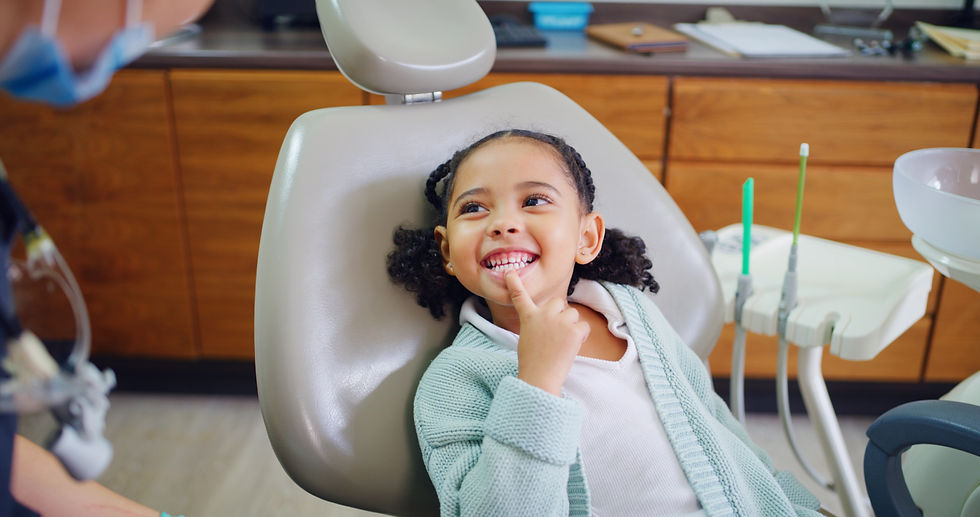
One of the most common questions parents ask is simple:
How often should my child see the dentist?
The short answer is typically every six months.
The more accurate answer depends on your child’s age, cavity risk, oral habits, airway development, and overall health.
At Shadelands Pediatric Dentistry in Walnut Creek, we base recommendations on research, risk assessment, and a whole-child approach to prevention.
Let’s break down what the science says.

When Should a Child First See the Dentist?
According to the American Academy of Pediatric Dentistry (AAPD), children should have their first dental visit by:
Age 1 or within six months of the first tooth erupting
The American Dental Association (ADA) and the American Academy of Pediatrics (AAP) support the same timeline.
Why so early?
Because early visits are about:
Preventing cavities
Evaluating growth and development
Guiding feeding and oral habits
Educating parents
Early preventive care reduces future dental disease and lowers treatment costs over time.

Why Every Six Months Is the Standard Recommendation
Most children benefit from dental visits every six months. This interval is based on:
The typical rate of plaque buildup
The timeline for early cavity formation
Monitoring erupting teeth
Reinforcing hygiene habits
Supporting positive behavior
The Centers for Disease Control and Prevention (CDC) notes that cavities remain the most common chronic childhood disease, affecting about 1 in 5 children aged 5–11.
Six-month visits allow dentists to:
Catch decay early
Apply preventive treatments like fluoride varnish or sealants
Monitor jaw growth
Evaluate airway and breathing patterns
Do Some Children Need More Frequent Visits?
Yes.
Dental care should be individualized based on risk. The AAPD recommends a Caries Risk Assessment (CRA) to determine how often a child should be seen.
Children may need visits every 3–4 months if they:
Have a history of cavities
Have special healthcare needs
Experience dry mouth
Have orthodontic appliances
Show early enamel demineralization
Have high sugar exposure
Exhibit mouth breathing or enamel erosion
Frequent monitoring allows us to intervene early and gently.
How Growth and Development Influence Visit Frequency
Beyond cavities, regular visits help monitor:
Jaw development
Tooth eruption timing
Orthodontic spacing
Tongue posture
Signs of airway restriction
Bruxism (teeth grinding)
The National Institute of Dental and Craniofacial Research (NIDCR) emphasizes that oral health is closely linked to overall health and development.
At Shadelands, we look at:
Sleep patterns
Breathing habits
Muscle function
Facial growth
Because prevention is more than just cavity checks.
What Happens at a Routine Pediatric Dental Visit?
A typical visit may include:
Professional cleaning
Oral exam
Growth and development evaluation
Cavity risk assessment
Fluoride treatment if appropriate
Sealant evaluation
Airway and habit screening
Education tailored to your child’s age
The goal is to prevent problems, not just treat them.
What If My Child Has No Cavities?
Even children with perfect brushing habits benefit from routine exams.
Why?
Because:
Cavities can form between teeth or under the surface
Jaw development changes quickly in childhood
Early orthodontic concerns are easier to manage
Oral habits may go unnoticed at home
Preventive care is proactive care.

How Dental Visits Support Whole-Body Health
Research continues to show connections between oral health and overall wellness.
The World Health Organization (WHO) recognizes oral diseases as a major global health burden and emphasizes preventive care across the lifespan.
Regular visits support:
Healthy nutrition
Proper chewing
Clear speech development
Better sleep when airway concerns are identified early
Dental care is foundational to systemic health.
What About Insurance Recommendations?
Many dental insurance plans cover preventive visits every six months. However, coverage guidelines are not the same as clinical recommendations.
Care decisions should be based on:
Risk level
Developmental stage
Individual health factors
Not just what insurance allows.
So, How Often Should My Child See the Dentist?
For most children:
✔ Every six months
For higher-risk children:
✔ Every 3–4 months
For infants:
✔ By age one, then based on risk
✔ If nursing or latch problems exist
The best schedule is the one tailored to your child’s needs.
A Prevention-First Philosophy at Shadelands Pediatric Dentistry
At Shadelands Pediatric Dentistry in Walnut Creek, we take a thoughtful, research-based approach to preventive care.
We believe:
Early intervention matters
Individualized care is essential
Growth and airway development deserve attention
Small, consistent habits create lifelong health
If you’re unsure how often your child should be seen, we’re happy to guide you.
Schedule Your Child’s Visit
Have questions about your child’s dental schedule?
Contact Shadelands Pediatric Dentistry to create a preventive plan that supports healthy smiles and whole-body wellness.



Comments