What Is an Orofacial Myofunctional Disorder in Children and How Do You Know If Your Child Has One?

Many parents notice things like mouth breathing, thumb sucking, or difficulty chewing and wonder if these habits will simply fade with time. In some cases they do. In others, these patterns are signs of an orofacial myofunctional disorder (OMD).
Understanding OMDs can help parents recognize when support may be helpful and how early, gentle intervention can support healthy growth, breathing, and development.
At Shadelands Pediatric Dentistry in Walnut Creek, we take a whole-child approach that looks beyond teeth to understand how muscles, breathing, and oral habits influence a child’s overall wellness.
What Are Orofacial Myofunctional Disorders?
Orofacial myofunctional disorders are patterns of improper muscle function involving the lips, tongue, jaw, and face. These patterns can affect how a child breathes, chews, swallows, speaks, and even how their face and jaws develop over time.
According to the American Speech-Language-Hearing Association (ASHA), OMDs involve incorrect positioning or movement of oral and facial muscles during rest, swallowing, or speech.
These disorders are not caused by one single factor. They often develop from a combination of habits, airway challenges, and developmental influences.
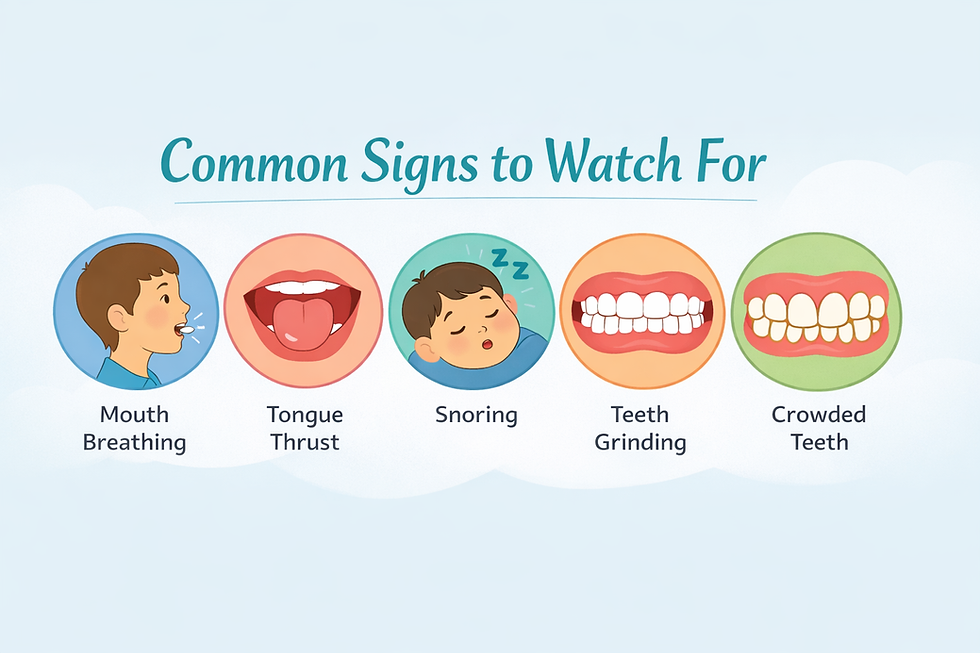
Common Signs of Orofacial Myofunctional Disorders
Children with OMDs may show one or more of the following signs:
Mouth breathing during the day or night
Tongue thrusting or low tongue posture
Difficulty chewing or swallowing certain foods
Speech differences
Prolonged thumb sucking or pacifier use
Teeth grinding or clenching
Open-mouth resting posture
Crowded teeth or narrow dental arches
Facial asymmetries
Not every child with these signs has an OMD, but patterns are important to notice.
How OMDs Affect Growth and Development
The muscles of the face and mouth play a powerful role in guiding growth. When oral muscles do not function properly, they can influence:
Dental alignment
Jaw and facial development
Airway size and breathing patterns
Sleep quality
Speech and swallowing
Nasal capacity
Research published by the National Institutes of Health (NIH) highlights the connection between tongue posture, airway development, and craniofacial growth in children.
Because children are still developing, early support can help guide healthier patterns before compensations become ingrained.
The Connection Between OMDs and Breathing
One of the most important links in orofacial myofunctional disorders is breathing. Mouth breathing is both a sign and a contributing factor to many OMDs.
The Cleveland Clinic notes that chronic mouth breathing in children may affect facial development, oral health, and sleep quality.
Nasal breathing supports proper tongue posture, balanced muscle use, and healthy airway development. When breathing patterns are disrupted, oral muscles often adapt in ways that are not optimal for growth.

How Pediatric Dentists Identify OMDs
Pediatric dentists are uniquely positioned to notice early signs of orofacial myofunctional disorders because they regularly evaluate:
Tongue mobility and resting posture
Jaw growth and dental arch shape
Wear patterns from grinding or clenching
Oral habits and muscle function
The American Academy of Pediatric Dentistry (AAPD) recognizes the dentist’s role in identifying functional and airway-related concerns during routine dental care.
At Shadelands Pediatric Dentistry, we look at how oral structures function together, not just how they look.
How OMDs Are Supported and Treated
Treatment for orofacial myofunctional disorders is not one-size-fits-all. Support often involves a team-based approach that may include:
Myofunctional therapy to retrain oral muscle patterns
Guidance on breathing, chewing, and swallowing habits
Addressing oral restrictions such as tongue-ties when appropriate
Collaboration with speech therapists, ENTs, or other providers
Myofunctional therapy is often described as “physical therapy for the mouth.” It focuses on helping the tongue, lips, and facial muscles function in healthy, coordinated ways.
The International Association of Orofacial Myology (IAOM) provides clinical guidance and research on myofunctional therapy and OMDs.

A Holistic, Whole-Child Perspective
At Shadelands Pediatric Dentistry, we view orofacial myofunctional disorders through a holistic lens. That means considering:
Oral health
Airway and breathing
Sleep quality
Nervous system regulation
Growth and development
Rather than focusing on symptoms alone, we aim to understand underlying patterns and support the body’s natural ability to adapt and grow.
When Should Parents Consider an Evaluation?
You may want to ask about an evaluation if your child:
Consistently breathes through their mouth
Snores or has restless sleep
Has difficulty chewing or swallowing
Grinds their teeth at night
Has crowded teeth or early orthodontic concerns
Presents with a hunched or forward head posture
Early awareness allows families to make informed decisions and explore supportive options at the right time.
Supporting Healthy Foundations for Lifelong Wellness
Orofacial myofunctional disorders are more common than many parents realize, but with early identification and thoughtful support, children can develop healthier patterns that support breathing, growth, and confidence.
At Shadelands Pediatric Dentistry in Walnut Creek, we are committed to evidence-based, compassionate care that supports the whole child. If you have questions about oral habits, breathing, or development, our team is always happy to help.
Schedule a Visit in Walnut Creek
If you’d like to learn more about orofacial myofunctional disorders or wonder whether an evaluation may be helpful for your child, contact Shadelands Pediatric Dentistry to schedule a visit.


Comments